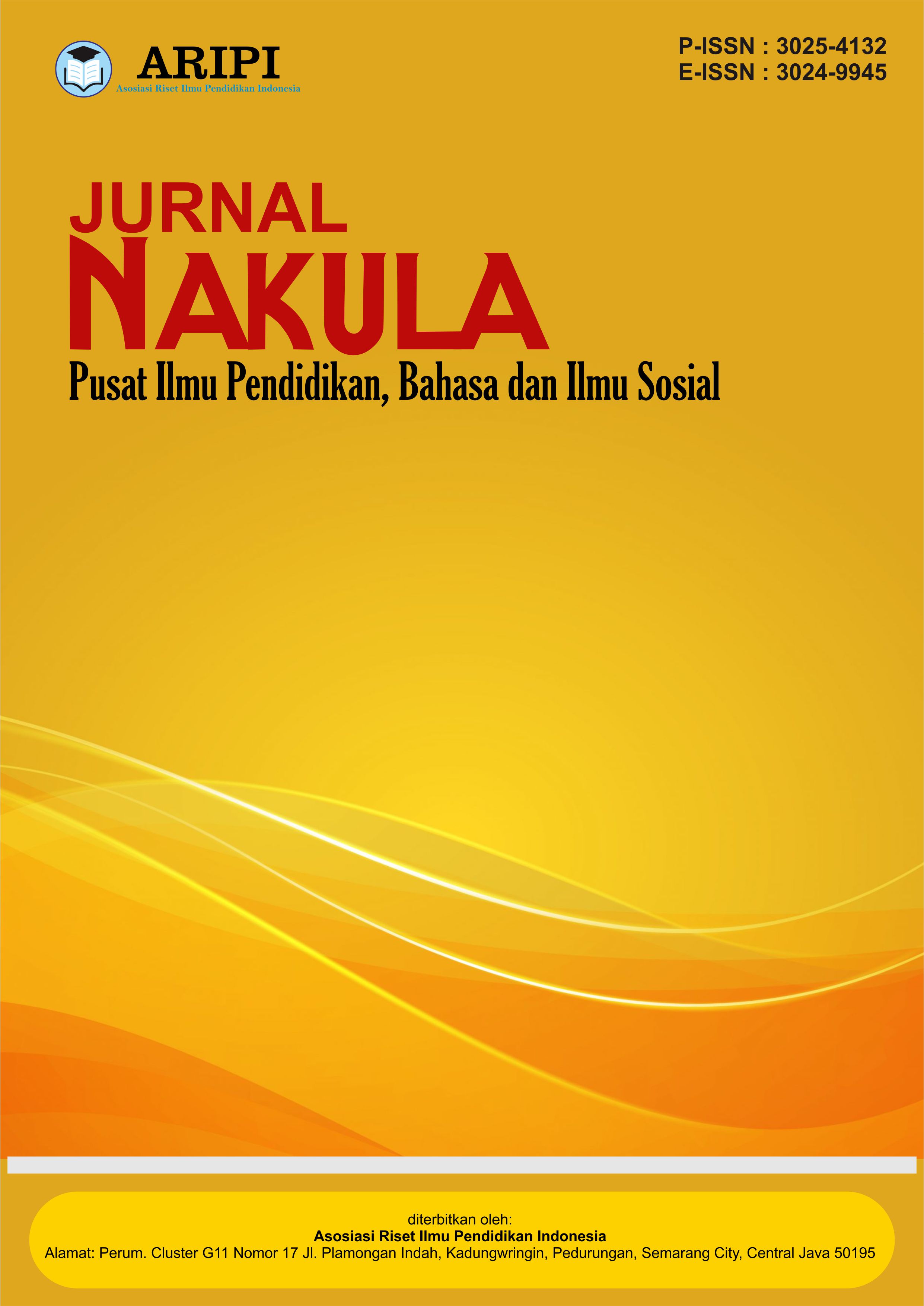
Pembelajaran Menganalisis Teks Prosedur dengan Menggunakan Model Problem Based Learning di Kelas 9 SMPN 2 Sukaluyu Cianjur
DOI:
https://doi.org/10.61132/nakula.v4i1.2565Keywords:
Analytical Skills, Indonesian Language Learning, Junior High School, Problem Based Learning, Procedural TextAbstract
Analyzing procedural texts is an essential competence in Indonesian language learning at the junior high school level, as it requires students to apply analytical thinking and understand textual structures systematically. However, in classroom practice, students often experience difficulties in identifying text structure, linguistic features, and communicative purposes of procedural texts. This study aims to describe the implementation of the Problem Based Learning model in teaching procedural text analysis to ninth-grade students at SMPN 2 Sukaluyu Cianjur and to examine its role in developing students’ analytical abilities. The research employed a qualitative descriptive approach involving students and an Indonesian language teacher as research subjects. Data were collected through classroom observation, analysis of students’ work, and documentation of learning activities. Data analysis was conducted through data reduction, data display, and conclusion drawing. The findings indicate that the implementation of Problem Based Learning increased students’ engagement in the learning process, encouraged active discussion and collaboration, and supported students in understanding and analyzing the structure and linguistic features of procedural texts more effectively. Students were not only able to comprehend procedural text concepts theoretically but also demonstrated the ability to apply analytical skills in evaluating and revising texts. The learning process became more meaningful as students actively constructed knowledge through problem-solving activities related to real-life contexts. The results of this study imply that Problem Based Learning can serve as an effective alternative instructional model for Indonesian language learning, particularly in fostering analytical skills, learner autonomy, and meaningful engagement in procedural text instruction at the junior high school level.
Downloads
References
Abdullah, K., Jannah, M., Aiman, U., Hasda, S., Fadilla, Z., Taqwin, Masita, Ardiawan, K. N., & Sari, M. E. (2022). Metodologi penelitian kuantitatif. Yayasan Penerbit Muhammad Zaini. http://penerbitzaini.com
Barrows, H. S. (1986). A taxonomy of problem‐based learning methods. Medical Education, 20(6), 481–486. https://doi.org/10.1111/j.1365-2923.1986.tb01386.x
Haslinda, H. (2024). Pembelajaran Bahasa Indonesia dengan menggunakan model problem based learning berbasis pendidikan karakter. Innovative: Journal of Social Science Research, 4(2), 6505–6512. https://doi.org/10.31004/innovative.v4i2.10103
Hmelo-Silver, C. E. (2004). Problem-based learning: What and how do students learn? Educational Psychology Review, 16(3), 235–266. https://doi.org/10.1023/B:EDPR.0000034022.16470.f3
Kemendikbudristek. (2023). Panduan pembelajaran dan asesmen Kurikulum Merdeka jenjang SMP. Kementerian Pendidikan, Kebudayaan, Riset, dan Teknologi Republik Indonesia.
Nurrochmat, D., Prabowo, A. H., & Aryanto. (2024). Penerapan problem based learning untuk meningkatkan keterampilan menulis teks prosedur siswa kelas VII SMP Muhammadiyah PK Surakarta. Wacana: Jurnal Bahasa, Seni, dan Pengajaran, 8(2), 1–10. https://doi.org/10.29407/jbsp.v8i2.22451
Putri, A. R., & Widodo, S. (2023). Penerapan model problem based learning dalam meningkatkan keterampilan menulis siswa sekolah menengah pertama. Jurnal Pendidikan Bahasa dan Sastra Indonesia, 8(2), 145–154.
Rahmawati, D., & Kurniawan, E. (2024). Pengaruh problem based learning terhadap kemampuan berpikir kritis siswa pada pembelajaran Bahasa Indonesia. Jurnal Pendidikan Humaniora, 11(1), 77–86.
Ristati, Norahmi, M., & Amalia, N. (2022). Pengaruh implementasi problem-based learning terhadap pembelajaran procedural text dan berpikir kritis di kelas VIII SMP. Jurnal Pendidikan, 23(2), 85–96. https://doi.org/10.52850/jpn.v23i2.5221
Salsabila, F. (2024). Manajemen pembelajaran Bahasa Indonesia melalui metode problem based learning untuk meningkatkan prestasi belajar siswa SMP. Jurnal Keguruan dan Ilmu Pendidikan, 2(4), 111–117. https://doi.org/10.61116/jkip.v2i4.352
Savery, J. R. (2006). Overview of problem-based learning: Definitions and distinctions. Interdisciplinary Journal of Problem-Based Learning, 1(1), 9–20. https://doi.org/10.7771/1541-5015.1002
Setiawan, S. (2023). Efektivitas model pembelajaran problem based learning untuk meningkatkan hasil belajar materi teks prosedur. JGuruku: Jurnal Penelitian Guru, 1(2), 34–47.
Suyatiningsih, P. (2022). Meningkatkan kemampuan menelaah teks prosedur melalui metode problem based learning pada siswa kelas VII SMP Tri Mulya Jakarta. Linggau Journal of Language Education and Literature, 2(3), 100–110.
Syamsul, T. D., Guampe, F. A., Amzana, N., Alhasbi, F., Yusriani, Y., Yulianto, A., Handayani, S., Ayu, J. D., Widakdo, G., Virgantari, F., Halim, H., & Naryati, N. (2023). Metode penelitian kuantitatif: Teori dan penerapannya. Tahta Media Group.
Wada, F. H., Pertiwi, A., Hasiolan, M. I. S., Lestari, S., Sudipa, I. G. I., Patalatu, J. S., Boari, Y., Ferdinan, Puspitaningrum, J., Ifadah, E., & Rahman, A. (2024). Buku ajar metodologi penelitian. CV Science Techno Direct. PT Sonpedia Publishing Indonesia. https://www.researchgate.net/publication/377223521
Downloads
Published
How to Cite
Issue
Section
License
Copyright (c) 2026 Jurnal Nakula : Pusat Ilmu Pendidikan, Bahasa dan Ilmu Sosial

This work is licensed under a Creative Commons Attribution-ShareAlike 4.0 International License.