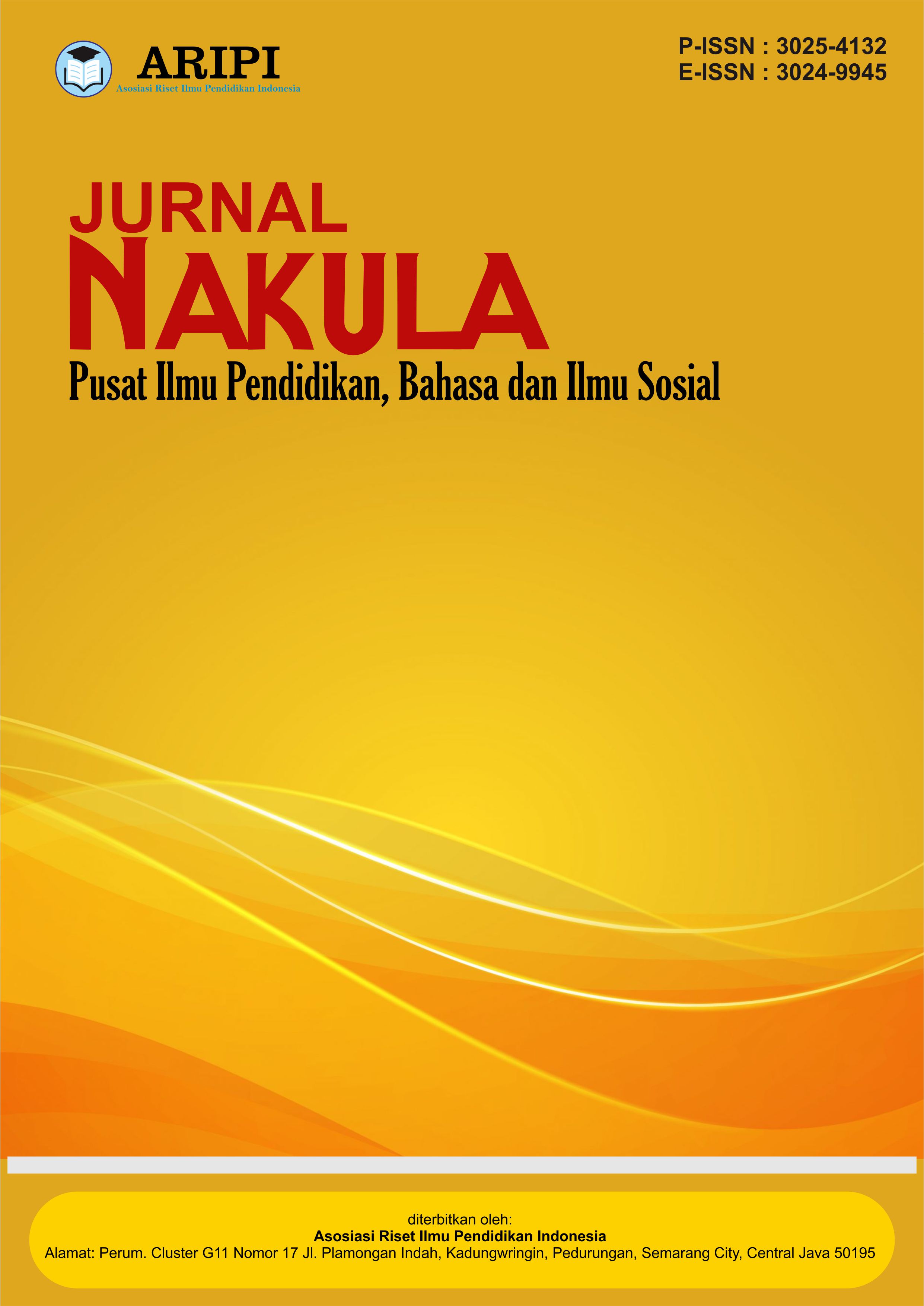
Penerapan Instrumen pada Anak Berkebutuhan Khusus dalam Katagori Bahasa/ Komunikasi di MI Nurul Falah III Kabupaten Tangerang
DOI:
https://doi.org/10.61132/nakula.v4i1.2623Keywords:
Aphasia, Children with Special Needs, Inclusive Education, Multisensory Approach, Students' Communication SkillsAbstract
This study focuses on describing the communication conditions and language barriers experienced by Children with Special Needs (CSN) in the language/communication category at MI Nurul Falah III, Tangerang Regency. In addition, the research examines the use of instruments applied to support the improvement of students’ abilities. A descriptive qualitative approach was employed through observation and interviews with two students in grades V and VI who exhibited symptoms of aphasia and speech fluency disorders. The findings indicate that both students were able to understand basic instructions but continued to face challenges in fluent speech, appropriate vocabulary selection, comprehension of abstract concepts, and reading comprehension. Interventions provided included speech therapy with a multisensory approach, the use of concrete media, gradual learning, and strategies to enhance focus and concentration. Overall, this study emphasizes that the appropriate selection of language therapy instruments is crucial to supporting the development of communication skills among CSN in inclusive educational settings.
Downloads
References
A. Rahman, S.A. Munandar, A. Fitriyani, Y. Karlina, & Yumriani. (2022). Pengertian pendidikan, ilmu pendidikan dan unsur-unsur pendidikan. 2(1), 1–8.
Akib, E., & Akhir, M. (n.d.). ANALISIS PELAKSANAAN PEMBELAJARAN MEMBACA.
Angraini, A., Salsabila, A., Aisnania, R., Hadana, W. F., Mustika, D., Khusus, A. B., & Inklusi, P. P. (2024). PENDIDIKAN INKLUSI SEBAGAI PERAN PENTING DALAM MEMBERIKAN PENDIDIKAN SETARA KEPADA ANAK BERKEBUTUHAN KHUSUS. 7, 6331–6338.
Bilqis Putri Anas, Choyrunisa Cahya Assago, Misya Lova Haqsya Afrilia Delvi, Wardah Nuranisa, & Siti Hamidah. (2024). Gangguan Bahasa Pada Penderita Afasia. Pragmatik : Jurnal Rumpun Ilmu Bahasa Dan Pendidikan , 2(3), 33–41. https://doi.org/10.61132/pragmatik.v2i3.673
Fitriani, R. M., P, K. A., Fauzan, Y., S, S. H. N., D, J. M., T, M. D., & Nurfadillah, S. (2021). ANALISIS PEMBELAJARAN ANAK APHASIA DAN DISKALKULIA PADA SISWA DI SD N JATAKE 4. 3, 506–513.
Khairuddin. (2020). PENDIDIKAN INKLUSI DI LEMBAGA PENDIDIKAN. IX(1), 82–104.
Mardiana, E., Sumadyo, B., & Pgri, U. I. (2025). Gangguan Berbahasa pada Peserta Didik Berkebutuhan Khusus dengan Afasia di Kabupaten Bekasi sebagai Landasan Program Intervensi. 9(1), 187–194. https://doi.org/10.26539/teraputik.914022
Permata, S. D., Guru, P., Dasar, S., & Malang, U. N. (2025). JURNAL PENDIDIKAN INKLUSI Citra Bakti. 3, 33–41.
Septiani, R. A. D., & Wardana, D. (2022). Implementasi Program Literasi Membaca 15 Menit Sebelum Belajar Sebagai Upaya Dalam Meningkatkan Minat Membaca. V(2), 130–137.
Shidqi, T. S., & Budi, S. (2023). Penggunaan Metode Multisensori untuk Meningkatkan Kemampuan Membaca Anak Berkebutuhan Khusus : Studi Literatur. 7, 22076–22079.
Tasari, & Muryanti. (2023). Efektivitas Metode Semantik Divergen Terhadap Kemampuan Bahasa Ekspresif Pada Penderita Afasia Lancar Di Kecamatan Jebres. 1, 289–296.
Zuhairia, A., Mirza, A., Suratman, D., & Fitriawan, D. (2023). Pengenalan konsep bangun ruang pada peserta didik tunanetra di slb. 7(1), 39–49. https://doi.org/10.36526/tr.v
Downloads
Published
How to Cite
Issue
Section
License
Copyright (c) 2026 Jurnal Nakula : Pusat Ilmu Pendidikan, Bahasa dan Ilmu Sosial

This work is licensed under a Creative Commons Attribution-ShareAlike 4.0 International License.